Sphere movement
The movement of the spheres inside the bioreactor improves contact between the wort and yeast, contributing to a more uniform fermentation.
 SA—MARTE | Soluções para bebidas
Quero conversar


Biotechnology applied to fermented beverage production
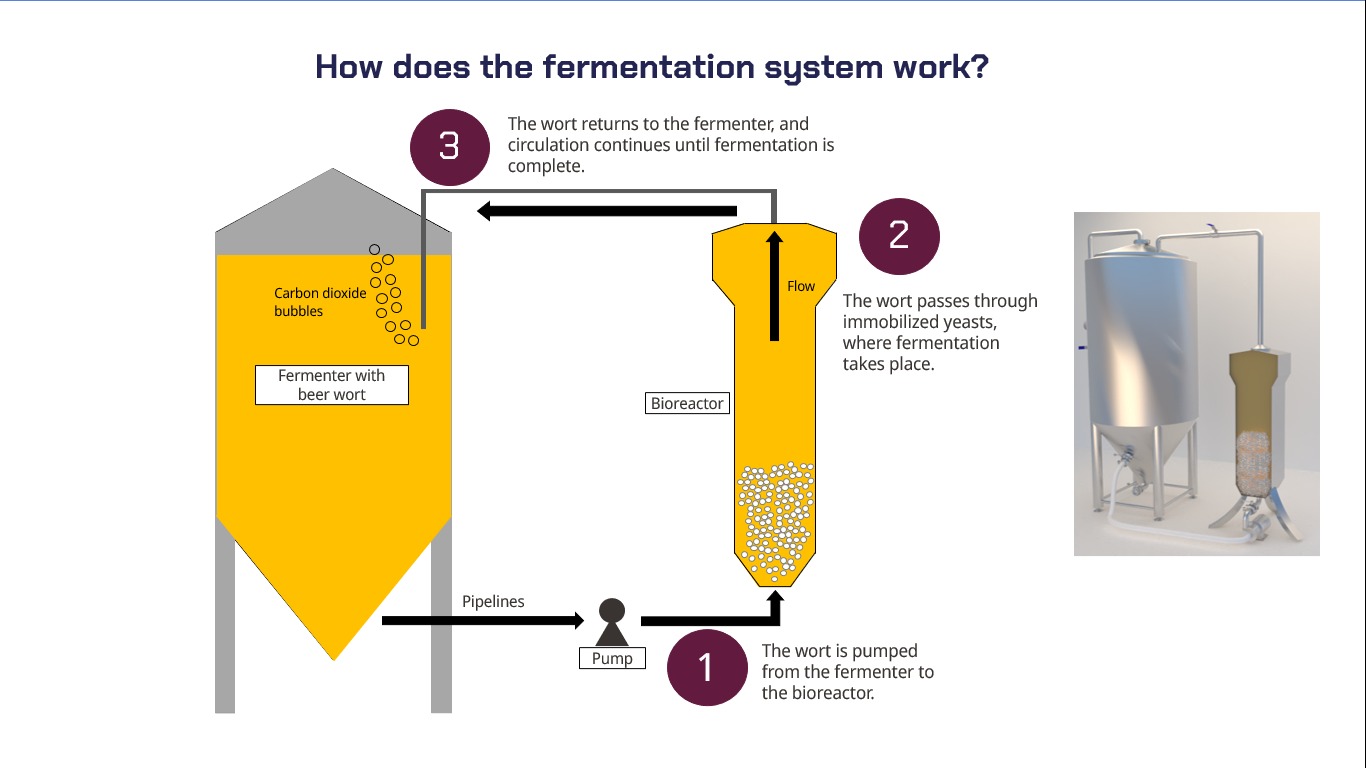
Our system combines your fermenter with our bioreactor, which uses yeast immobilized in small spheres.
The result? More productivity in less time without compromising quality.
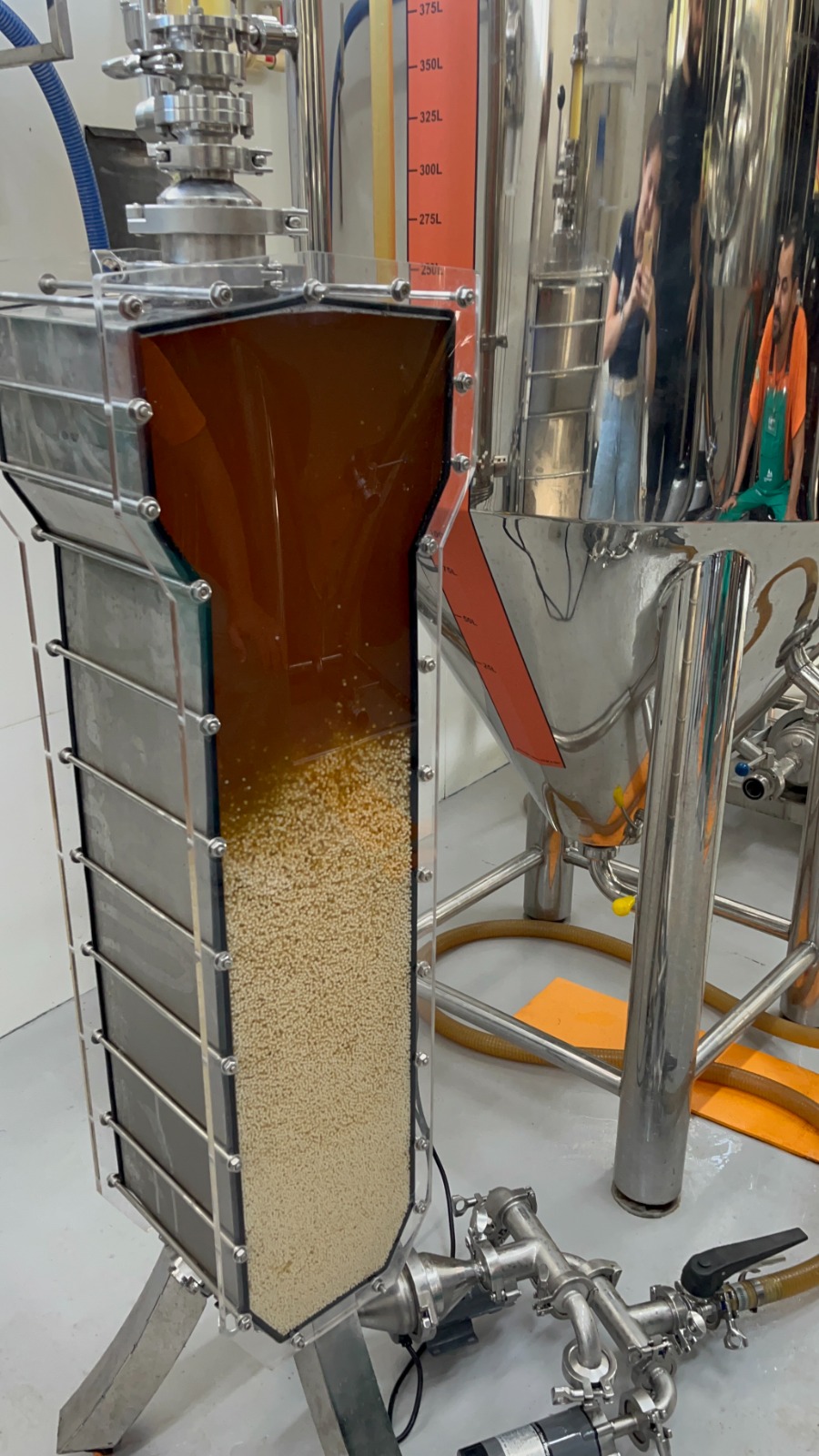
Our system uses small spheres that house the yeast responsible for fermentation. They remain inside a bioreactor, where the wort is pumped and recirculated until fermentation is complete.
With this technology, we can reduce beer fermentation time to approximately 48 hours.
The system can also be applied to other fermented beverages, such as wine and mead. What is more, when the correct operation and washing protocols are followed, the yeast spheres can be reused for up to 20 fermentation cycles.
Small spheres. Big possibilities.
Designed to house the yeast responsible for fermentation, our spheres are the heart of our technology. They connect the bioreactor and fermenter to make beverage production more efficient.
The movement of the spheres inside the bioreactor improves contact between the wort and yeast, contributing to a more uniform fermentation.
The wort circulates through the system, carrying sugars and nutrients to the yeast while allowing fermentation products to be released into the liquid.
With our system, the yeast is protected by the immobilization process. At the end of each cycle, it can continue to be used in the next fermentation, reducing the need to prepare new yeast for every production run.
The system was developed to simplify operation and production routines while making better use of the yeast across cycles.
Take care of the yeast so it can be reused in future cycles. After each fermentation, immobilized yeast should be kept refrigerated and stored in a specific preservation solution, following the protocols recommended by SA-MARTE.
We analyze your current or planned production to recommend the bioreactor best suited to your needs.
We work with stainless steel and acrylic models. Acrylic allows visual monitoring of fermentation, while stainless steel makes it possible to recover the carbon dioxide generated at the end of the process.
We offer different yeast options for beer production, including Ale, Lager, Weiss, Sour, maltose-negative and Kveik. We also work with options for other fermented beverages, such as mead and wine.
We provide immobilized yeast in the quantity appropriate for each batch, ready to be used in the system.
Tell us a little about your production. The SA-MARTE team can show you how to integrate SA Immobilized Fermentation into your process.